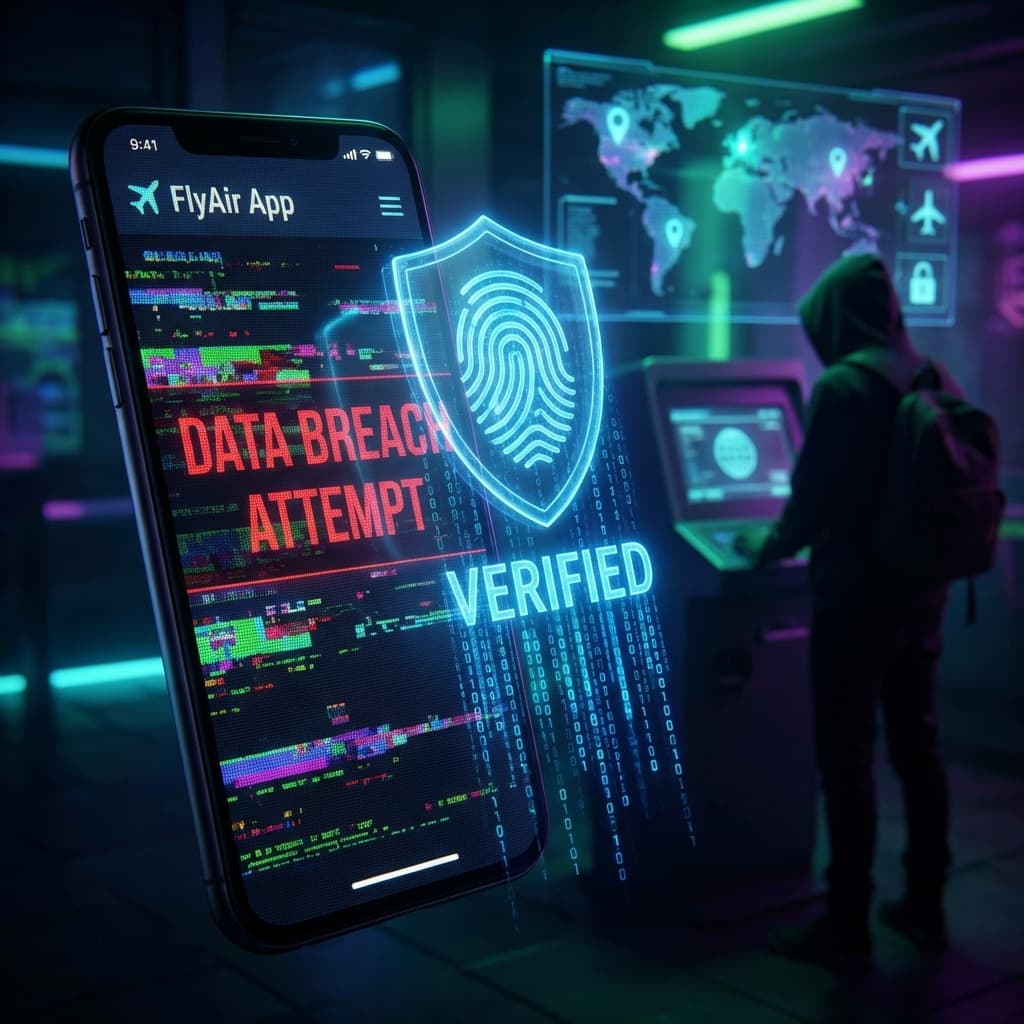
Are Travel Apps Safe? Avoiding the 'Phantom Booking' Trap
In 2026, you don't book a flight; you download an app. But amidst the sleek UIs of Expedia, Hopper, and Airbnb, a dark ecosystem of "Clone Apps" and "Phantom Bookings" has emerged. Cybercriminals aren't just hacking servers anymore; they are building fully functional fake travel agencies that take your money, send you a confirmation email, and leave you stranded at the airport with a ticket that never existed.
Security is no longer just about strong passwords. It's about "Supply Chain Verification."
The "Clone App" Epidemic
Hackers are uploading apps to 3rd party stores (and sometimes slipping past Google/Apple filters) that look exactly like "Delta Airlines" or "Marriott Bonvoy."
The Scam: You log in. It steals your credentials. It even lets you "book" a flight with your credit card. The app works perfectly... until you get to the gate.
Step-by-Step Guide: The Security Audit
Before entering your credit card, check these 3 indicators.
Indicator 1: The Developer Name
Go to the App Store listing.
Real: "Delta Air Lines, Inc."
Fake: "Delta.Flight.Deals LLC" or "Travel Best Booking"
If the developer name is generic, delete it.
Indicator 2: The "Confirmation Number" Test
If you book through a third-party app (like Hopper or Skyscanner), you should receive a "PNR" (Passenger Name Record)—a 6-character code (e.g., GH7J2K)—within minutes.
The Fix: Immediately take that code and plug it into the official airline website. If the airline site says "Record Not Found," call your credit card company instantly. Do not wait until the day of travel.
The Public Wi-Fi Hazard
"I audit travel hacks. I sat in a Starbucks at JFK and set up a fake Wi-Fi hotspot named 'JFK_Free_WiFi_5G'. In 30 minutes, 40 people connected. I could see the unencrypted traffic of every app they opened. Most travel apps are encrypted (HTTPS), but many 'deal aggregate' sites are not. Never book a flight on public Wi-Fi without a VPN. Use your cellular data; it's safer." — Jessica Lee, Cybersecurity Analyst
Comparison: Direct vs. OTA Security
| Security Layer | Airline Direct App | Major OTA (Expedia) | Small OTA (CheapoAir) |
|---|---|---|---|
| Data Encryption | Bank-Grade (AES-256) | Bank-Grade | Standard |
| Fraud Liability | High (Airline owns ticket) | Medium | Low (Hard to get refund) |
Conclusion
Convenience is the enemy of security.
Use apps to find flights. Use apps to track flights. But when it comes time to enter the 16 digits of your credit card, pause. Are you on the official app? Are you on a secure network? The $20 you save on a shady app isn't worth the $2,000 loss of a phantom ticket.
About the Author
Jessica Lee
Travel Writer
Passionate explorer sharing insights on Tech and authentic travel experiences.
AI Travel Pulse
Daily Generated Insights
The Rise of 'Silent Travel'
In a hyper-connected world, silent retreats are trending. From Vipassana in India to silent hiking in Finland, travelers are seeking destinations that offer digital detox and absolute quiet to recharge mental batteries.
Powered by TravelGPT-4 • Updated daily at 00:00 UTC
Did you know?
Subscribers to our newsletter get these travel tips delivered directly to their inbox every week. Don't miss out on the latest travel hacks!
Subscribe Now →Browse More Articles

Should You Use Points for Flights or Hotels? The Valuation Guide
February 16, 2026

Are Travel Rewards Easier to Earn Than Cashback? The Velocity Myth
February 14, 2026

Are Travel Agents Better for Luxury Vacations? The 'VIP' Reality
February 13, 2026
Are Travel Refunds Guaranteed? The Rule 240 & DOT Revolution
February 12, 2026
Is Travel Medical Insurance Mandatory for Europe? The 2026 ETIAS Guide
February 11, 2026